
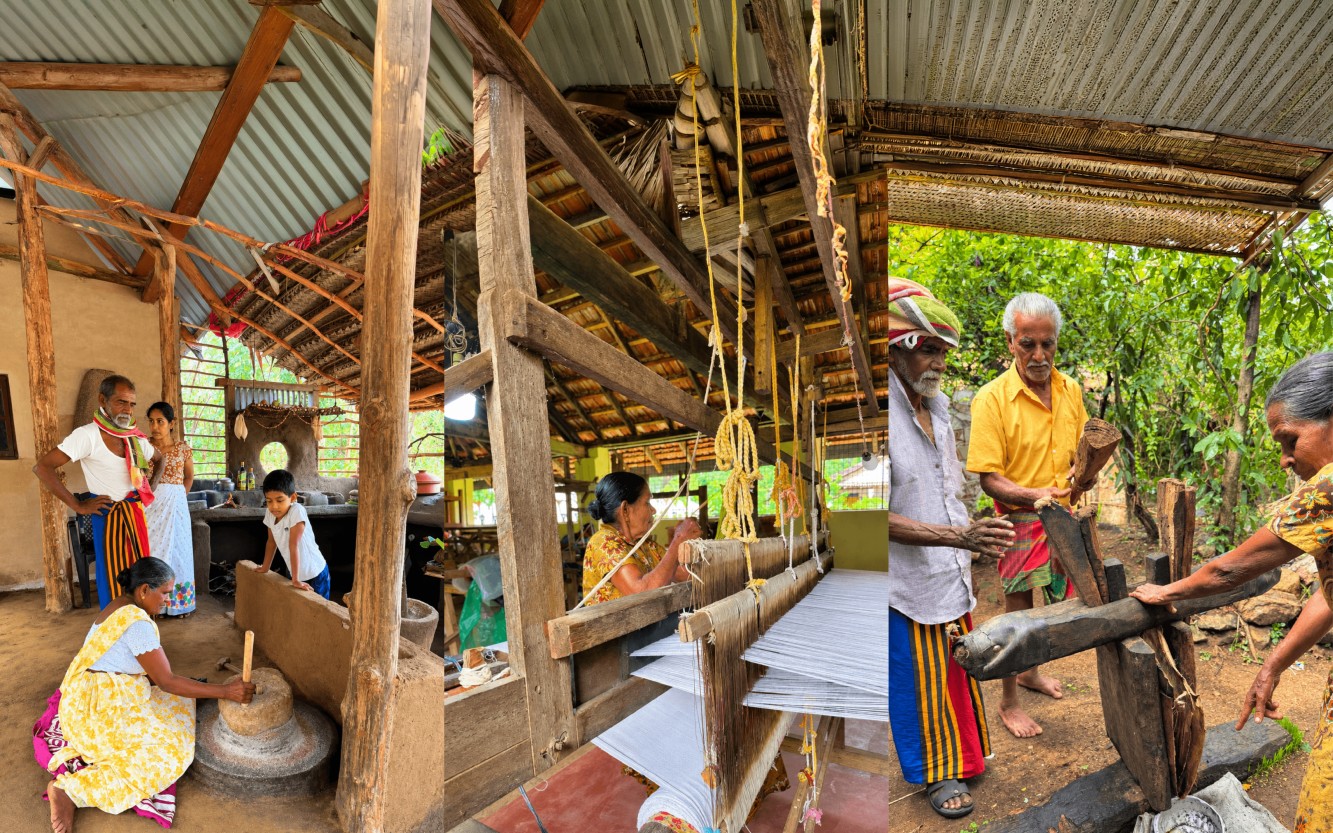
Some of the best travel experiences in Sri Lanka begin with fairly simple things: a meal prepared with local ingredients, a skill passed down through a family, time spent with someone who knows the land well.
In the Matale District, our team has been working with a rural village to develop a community-based tourism experience from the things that already give the place its character.
The idea is simple. The village remains true to itself, while tourism finds a respectful place within everyday community life.
For travellers, this offers a chance to understand Sri Lanka through the people who live here. For the community, it opens up ways to take part in tourism and benefit from it while deciding how their traditions, knowledge and way of life are shared.
What is community-based tourism in Sri Lanka?
Community-based tourism gives local people an active role in how travellers experience the place they call home.
That can include sharing traditional skills, preparing local food, explaining livelihoods, guiding visitors through the surrounding area or simply spending time together and talking about daily life.
The experience grows from the community itself.
This matters in Sri Lanka because so much of the country’s character lies beyond its best-known attractions. Villages across the island hold generations of knowledge about food, agriculture, craftsmanship, nature and local customs. Much of this rarely becomes part of a conventional travel itinerary.
Community-based tourism gives some of those stories a place within the visitor experience.
Beginning with what is already there
Every community has things that make it particular to that place.
In this part of the Matale District, they can be found in local knowledge, traditional livelihoods, food, craftsmanship and the relationship people have with the surrounding land.
We began by listening.
What do people here already know and do well? Which traditions are still part of everyday life? What would residents be comfortable sharing with visitors? Where could tourism create useful opportunities for people in the village?
Those conversations helped shape the experience.
Travellers can spend time with local people, learn about traditional practices, encounter skills passed between generations, enjoy food made with locally sourced ingredients and explore the landscape around the village.
None of these activities needs to be made more elaborate than it really is.
Their value comes from the people, the setting and the chance to understand how the different parts of village life fit together.
What can travellers experience in a village in Matale?
A community-led experience in Matale can give travellers a closer look at rural life in Sri Lanka through direct interaction with local people.
That may mean learning how a traditional skill is practised, hearing why a particular livelihood has remained important in the area, sharing a locally prepared meal or walking through a landscape with someone who understands how it has shaped life in the village.
The details matter because they give context to what a traveller sees.
Food becomes more than something served at a table when you know where the ingredients came from and who prepared it. A traditional skill carries a different meaning when you meet the person who learned it from an earlier generation. A rural landscape feels different when someone explains how people have lived and worked within it over the years.
This is where community-based travel can offer something conventional sightseeing often cannot: time with the people who understand the place from lived experience.
How can community-based tourism support local livelihoods?
Community-based tourism can direct more tourism activity towards local people by giving them a role in the visitor experience.
Someone preparing a meal can earn from the food and knowledge they share. A person with a traditional skill can introduce that craft or practice to visitors. People who understand the surrounding area can help travellers make sense of it.
The opportunities will differ from one community to another, which is exactly why the experience needs to begin locally.
A village should be able to decide what it wants to share, who wants to participate and how visitors fit into community life.
This also changes the relationship between traveller and host. Local people are participants in the tourism experience, with knowledge and skills that give visitors a better understanding of the destination.
For travellers, that usually means a more personal experience of Sri Lanka. For the community, it creates another way for tourism spending and opportunity to reach local households and livelihoods.
What makes a community tourism experience authentic?
An authentic community tourism experience comes from real local life, with the community deciding what is appropriate to share with visitors.
Authenticity becomes difficult when a tradition is changed simply to make it more entertaining or convenient for tourists.
The better approach is to understand what already happens in the community and find respectful ways for visitors to experience it.
That requires listening before developing an itinerary.
Some traditions may be suitable for visitors to experience closely. Others may be private or culturally sensitive. Some residents may want to participate in tourism, while others may prefer not to.
Those choices need to remain with the community.
For destination specialists, the job is to create the conditions for a good encounter between traveller and host without overproducing the experience.
The less we interfere with what makes the place genuine, the more likely travellers are to experience something that actually belongs there.
Why Matale has potential for community-based tourism
Matale District offers a useful example of what community-based tourism can contribute to Sri Lanka.
Travellers already know the country for its wildlife, beaches, ancient cities, tea country and cultural landmarks. Rural communities can add another layer to that experience by helping visitors understand how people live between those better-known destinations.
Matale is particularly interesting in this context because village life, local livelihoods, food traditions and the surrounding landscape can all form part of the visitor’s understanding of the area.
Experiences like this can also encourage travellers to spend time beyond Sri Lanka’s established tourism routes.
That does not require turning every village into a tourist attraction. The opportunity lies in identifying communities that want to participate and developing experiences at a scale that makes sense for them.
Done carefully, this can broaden what travellers see of Sri Lanka while creating additional sources of tourism-related income within local areas.
What should responsible community-based tourism look like?
A successful community tourism experience should work for the people who live there as well as the people who visit.
Visitor numbers tell only part of the story.
We also need to know whether local people are benefiting from the experience, whether they have a say in how it develops and whether the traditions being shared still feel like their own.
There are practical questions too.
Who provides the meal? Who guides the visitor? Who is paid for their time and knowledge? How much tourism can the community comfortably accommodate? Which parts of local life should remain private?
These questions are important because community-based tourism depends on trust. If an experience grows beyond what residents want or starts changing the very traditions travellers came to understand, something has gone wrong.
For us, this is an ongoing part of developing the Matale experience.
The aim is to create a visit that travellers remember while making sure the people who made that experience possible receive real value from it.
A different way to experience Sri Lanka
Sri Lanka has many communities whose stories rarely find their way into a standard itinerary.
Their knowledge may sit in a kitchen, a workshop, a field or a conversation with someone who has spent a lifetime in the area.
Bringing travellers into those spaces thoughtfully can add depth to a journey through Sri Lanka.
It can also change what we consider an attraction.
Sometimes the reason to visit a place is the chance to understand how people live there.
Our work in Matale is one small example of how that can happen. It has also reinforced a question we believe the tourism industry should ask more often:
Common questions about community-based tourism in Sri Lanka
What is community-based tourism?
Community-based tourism is a form of tourism in which local residents take part in shaping and delivering visitor experiences. It can involve local food, traditional skills, livelihoods, cultural practices, nature and knowledge of the surrounding area.
Why is community-based tourism important in Sri Lanka?
It can help travellers experience parts of Sri Lankan life that sit outside conventional sightseeing while creating tourism-related opportunities for local communities. It may also encourage visitors to explore areas beyond the country’s established tourism routes.
What can travellers experience through community-based tourism in Matale?
Experiences can include meeting local people, learning about traditional practices and livelihoods, enjoying locally prepared food and exploring the surrounding landscape with people who know the area well.
How does community-based tourism benefit local people?
It can create paid roles connected to food, guiding, traditional skills, local knowledge and other parts of the visitor experience. The exact benefits depend on how each experience is structured and how the community chooses to participate.
How can community tourism remain authentic?
The community needs a genuine say in what is shared and how it is presented. Experiences work best when they grow from existing traditions and everyday life instead of changing local practices purely for visitors.